You are halfway through a Pendola Pass rooftop loot run when the valley goes white. Out in the open the cold drains your health, and every other squad is sprinting for the same shelters.
The Arc Raiders Flash Freeze punishes anyone without a plan. Here is how it works, what is actually confirmed, and how we route, gear up and fight around it.
Table of Contents
- What Is Flash Freeze in ARC Raiders?
- How Flash Freeze Works on Pendola Pass
- Avalanche Shelters: Safe Rooms That Draw a Crowd
- How to Survive a Flash Freeze, Step by Step
- Gear and Loadout for the Pendola Pass Cold
- Fighting Over Shelters
- Flash Freeze vs Cold Snap
- Redirection: The Only Off Switch
- Plan Your Route Around the Storm Cycle
- Key Takeaways
- FAQ
What Is Flash Freeze in ARC Raiders?
Flash Freeze is the signature weather hazard of Pendola Pass, the snowbound map that arrived with the Frozen Trail update on October 8, 2026.
Quick answer:
It is a storm that sweeps the valley mid-raid and drains the health of anyone left outside. Get indoors or into an Avalanche Shelter, wait it out, then go back to looting.
Embark’s own preview warns of brutal flash freezes that cut through the valley.
The community wiki describes it as a harder version of the Cold Snap weather from other maps, built into the map instead of rotating in as a condition.
How Flash Freeze Works on Pendola Pass
Embark’s material and the wiki establish four things.
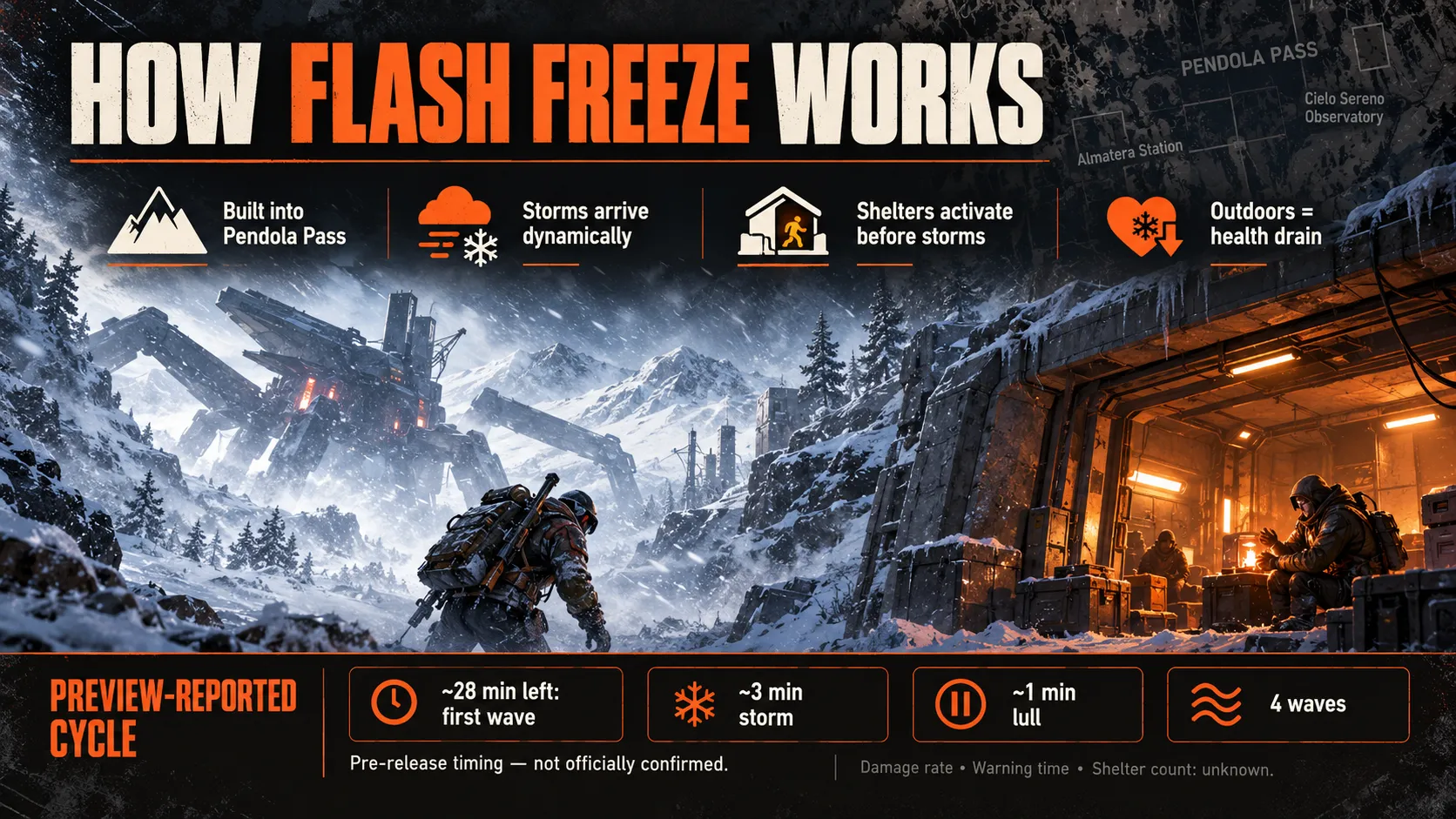
It is built into the map. The wiki lists Redirection, Night Raid and the ARC Frigate as Pendola Pass conditions and treats Flash Freeze as a separate mechanic of the map itself. You do not pick it from a condition list.
Storms arrive on their own schedule. Embark’s press release says Flash Freeze can sweep across the map at any time, so you need cover before the cold starts hurting.
Shelters announce the storm. Avalanche Shelters activate as a freeze approaches. The wiki adds only that a freeze may be indicated in game, so assume the warning is short.
Exposure drains health. Hands-on preview coverage describes cold that gradually drains health while you are outdoors.
The Reported Wave Cycle
Journalists who played a preview build reported a repeating pattern.
The first storm starts with about 28 minutes left in the raid. Each wave lasts roughly 3 minutes, a 1-minute lull follows, and the cycle runs 4 times before stopping.
That comes from a pre-release build, and Embark has not published the numbers. Use them as a planning baseline, not a promise.
The same coverage called the hazard Instant Freeze. That was the preview name. Embark’s own material says Flash Freeze.
What We Could Not Confirm
We found no official figure for the damage rate, the warning lead time or the number of shelters on the map.
Some guides print exact numbers for all three anyway. Treat those as guesses until Embark confirms them.
Avalanche Shelters: Safe Rooms That Draw a Crowd
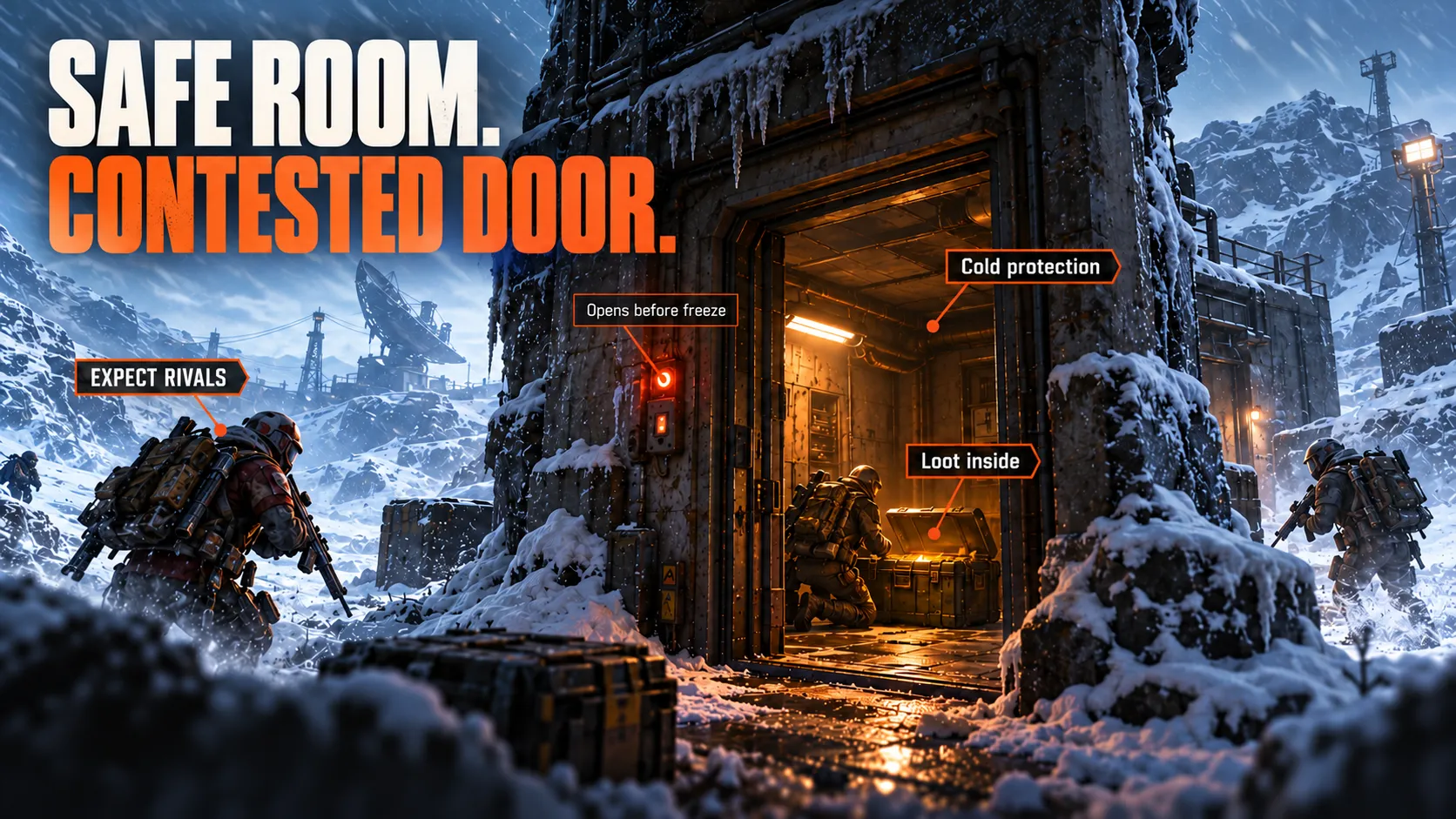
Per the same press release, shelters open up as a freeze approaches and offer both protection and loot. They can also attract opportunistic raiders.
That makes a shelter a contested objective, not a time-out. Every exposed raider has the same idea at the same moment, so expect company at the door.
Early preview footage showed squads waiting out storms inside ordinary buildings, so interiors appear to count as cover. Embark only names shelters as the designed answer, so confirm it on your first runs.
Our Pendola Pass guide covers the landmarks, the gondola and the other map conditions on this map.
How to Survive a Flash Freeze, Step by Step
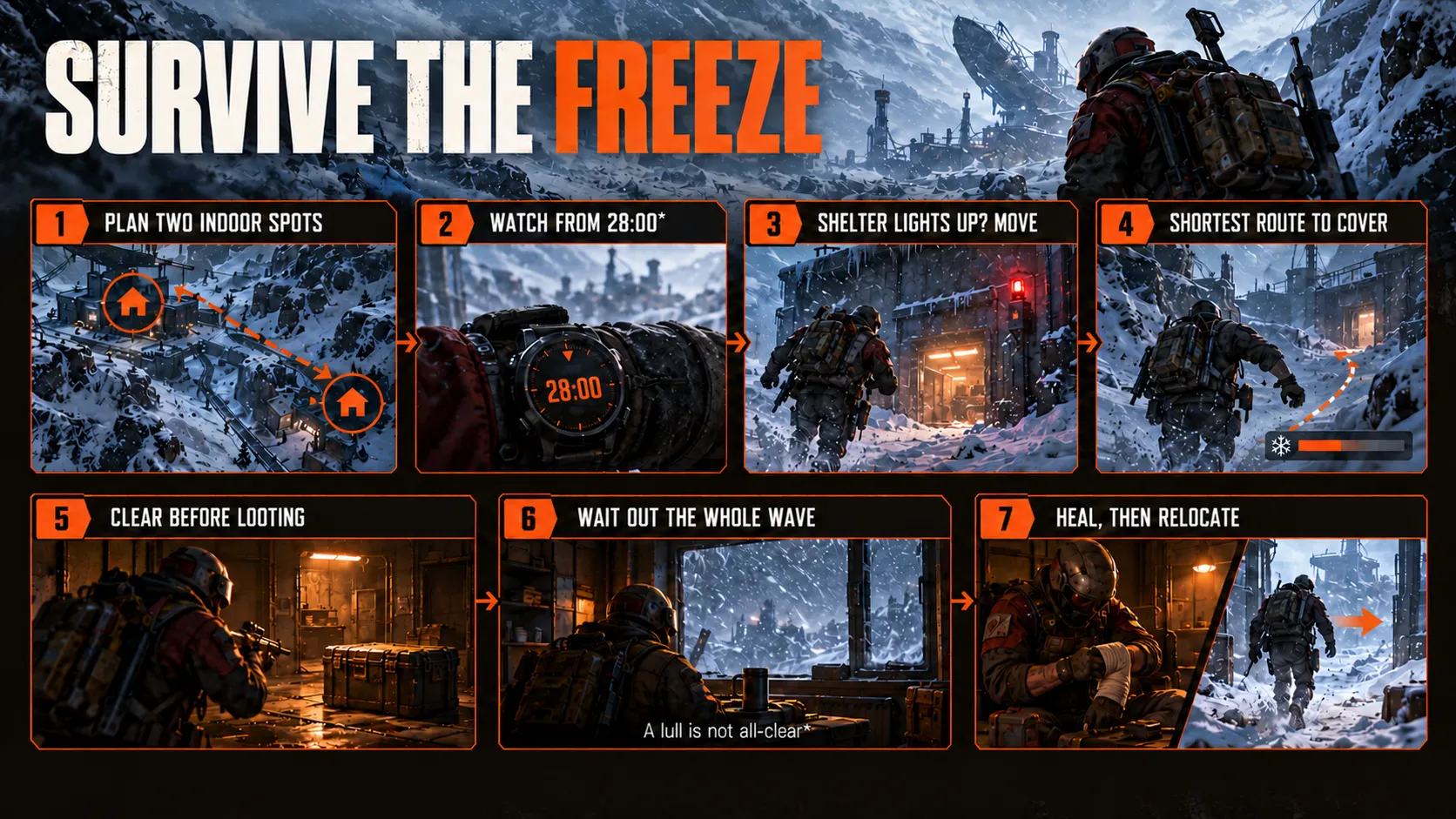
- Note two indoor spots on your route before the first storm. Know the nearest one from wherever you stand, plus a backup.
- Watch the clock from the 28-minute mark. If the preview numbers held at launch, that is when the first storm can begin.
- Break off the moment a shelter activates. Drop the container, disengage from the ARC patrol and move.
- Take the shortest route to cover. Speed beats a safer-looking path while your health is draining.
- Clear the room before you loot it. Shelters hold loot, and rivals are drawn to them.
- Stay inside for the whole wave. A 1-minute lull is barely enough to cross open ground, so do not treat it as an all-clear.
- Heal before you step out. Top up inside, then relocate.
Steps 2 and 6 lean on the preview numbers above. The rest holds whatever the final timings turn out to be.
Gear and Loadout for the Pendola Pass Cold
Pendola Pass mixes open ground, tight corridors and steep height changes, so the kit that matters is about reaching cover fast and winning fights inside it.
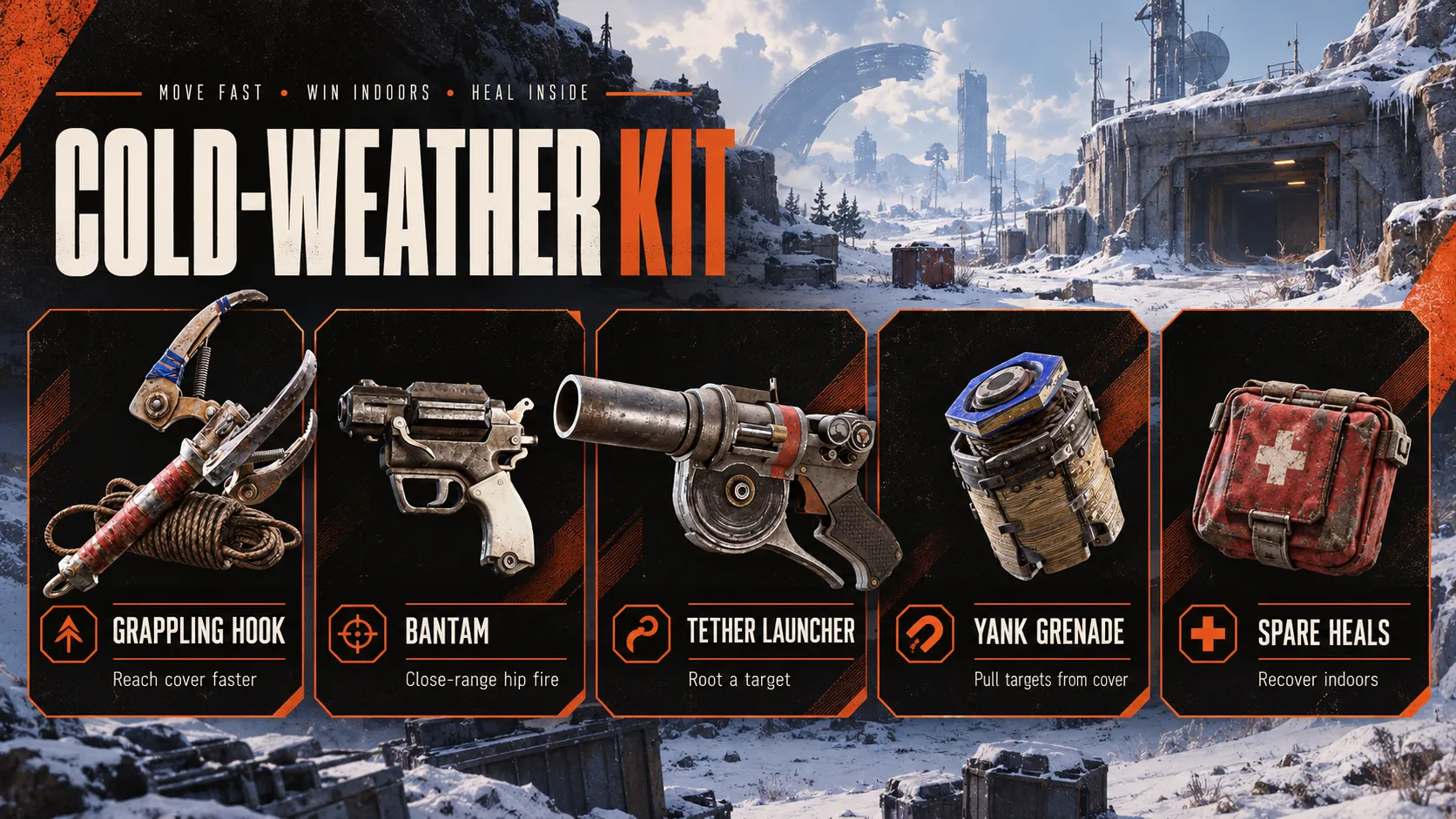
Grappling Hook. Embark says it lets you climb hard-to-reach spots, abseil off buildings and swing over large gaps. On a vertical map that can shorten the run to a shelter. Our Grappling Hook guide covers the blueprint, recipe and how to use the rope.
A close-range weapon. Shelters are small rooms. The Bantam revolver comes with a hip-fire ability, and Embark pitches it as effective against both ARC and raiders.
Tether Launcher and Yank Grenade. The launcher roots a target in place. The grenade pulls a nearby target with force, which Embark says works for dragging raiders out of cover. See our Tether Launcher and Yank Grenade guide for stats and recipes.
Spare heals. Cold damage is a cost you pay on the way to cover. Carry enough to top up once you are inside.
For full builds, see our best loadout setup and the rundown of the new Frozen Trail weapons.
Fighting Over Shelters
A run to cover can turn into a fight you did not plan for.
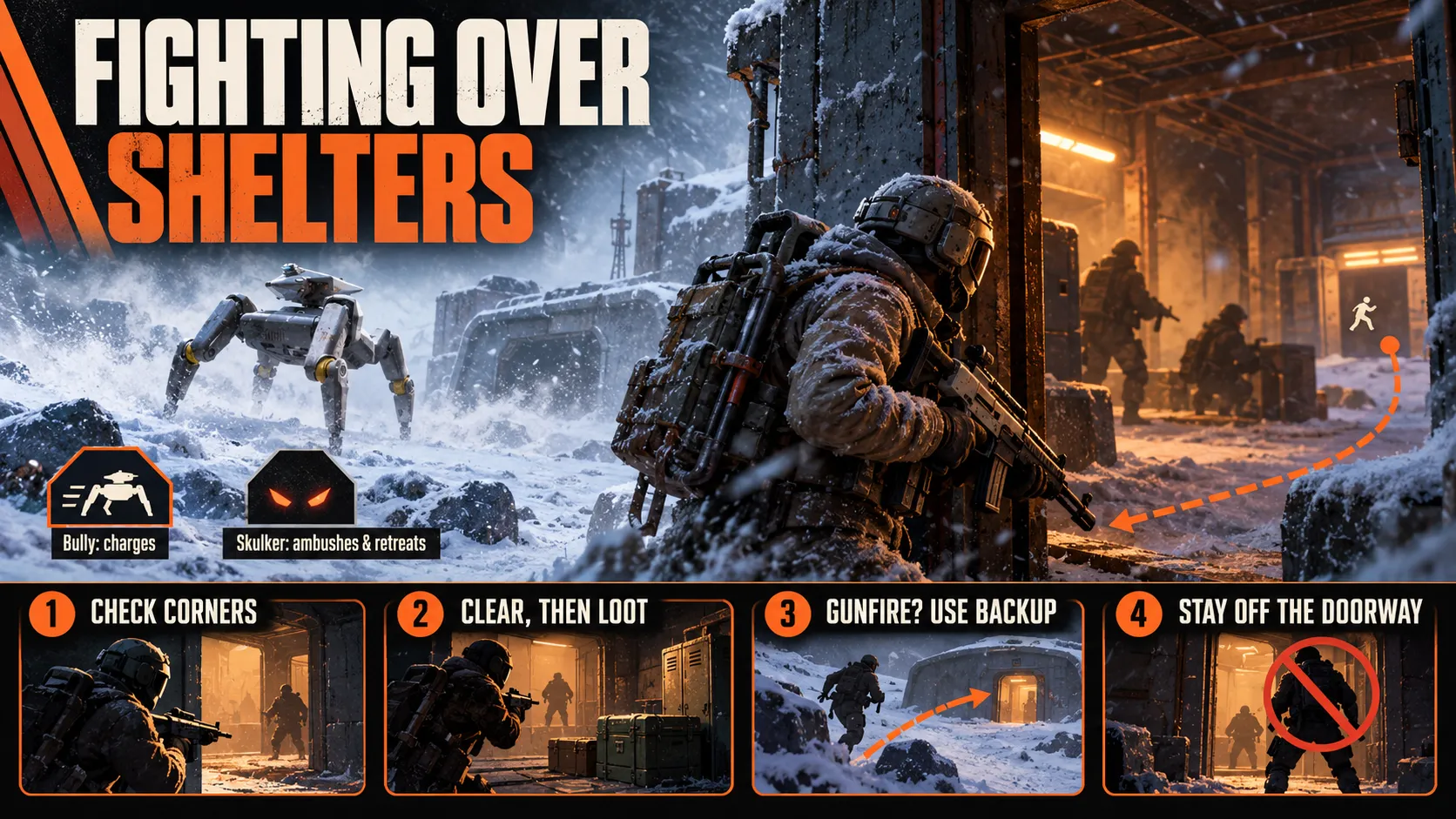
Embark describes the Bully as a fast machine that gallops onto your position and cedes no ground. The Skulker lies in wait at the edge of your vision and retreats after a strike.
Both punish a distracted raider, and a scramble for cover is exactly that. Our ARC enemies guide covers weak points and counters for both, and the Bully guide and Skulker guide go deeper on each.
Rules we follow once we reach a shelter:
- Assume the room is occupied until you have checked every corner.
- Loot after the room is clear, not on the way in.
- If gunfire is already coming from a shelter, treat it as taken and go to your backup.
- Keep your back off the doorway while you loot.
Flash Freeze vs Cold Snap
If you raided through Cold Snap, you have the instincts. Do not assume they transfer one to one.
| Feature | Flash Freeze | Cold Snap |
|---|---|---|
| Type | Built into Pendola Pass | A map condition that rotates in |
| Difficulty | The harder version, per the wiki | The baseline |
| Cover | Avalanche Shelters plus interiors | Any indoor space |
| Where | Pendola Pass only | Existing Rust Belt maps |
Redirection: The Only Off Switch
The Redirection map condition is exclusive to Pendola Pass, and the wiki’s Redirection page lists No Flash Freeze among its effects. Emperor Relays and falling debris come with it.
Embark’s press release says Redirection lets you draw Harvester Payloads away from the Collector and toward your own position.
Preview coverage described the same behavior under a slightly different name for the condition.
Our read: Redirection trades the cold for a different kind of pressure. Check the condition on the map screen before you queue, and choose by asking if you would rather fight the weather or the crowd.
Plan Your Route Around the Storm Cycle
If the preview numbers held, the storms would sit on the raid clock like this. Give or take a minute or two.
| Wave | Starts (minutes left) | Ends (minutes left) |
|---|---|---|
| 1 | 28 | 25 |
| 2 | 24 | 21 |
| 3 | 20 | 17 |
| 4 | 16 | 13 |
That is our arithmetic on reported numbers, not an official schedule.
Pendola Pass is also testing Dynamic Loot Zones, so area values shift between raids. Our Frozen Trail patch notes breakdown explains how that works, and our loot map guide covers container types.
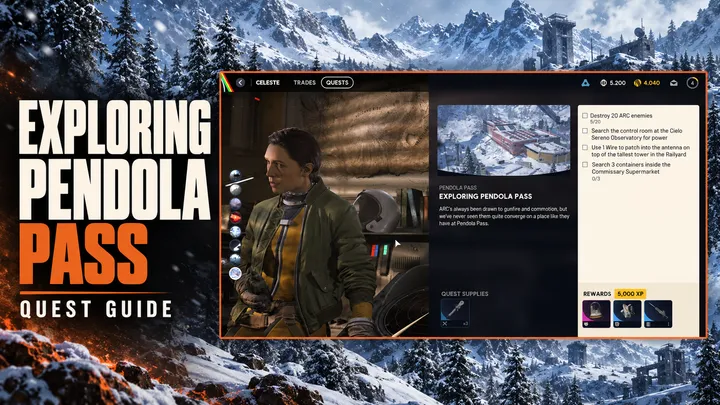
Pick stops that have an interior close by, and plan your exit before the last wave. Doing the Exploring Pendola Pass quest on the same run? Our quest guide lays out its four objectives as one loop, so you can plan your shelter stops around it. The gondola seats only three raiders, so see our extraction guide for the timing trade-offs.
New to extraction basics? Start with our beginner guide.
Key Takeaways
- Flash Freeze is a storm hazard built into Pendola Pass that drains health outdoors.
- Avalanche Shelters open as a freeze approaches and hold loot, but they draw rivals.
- Preview coverage reported 3-minute waves, a 1-minute lull and 4 waves per raid.
- The lull is too short to cross open ground, so stay inside for the full wave.
- Redirection is the one condition that switches the storms off.
- Know two indoor spots before the first storm, and carry a mobility gadget and spare heals.
FAQ
What is Flash Freeze in ARC Raiders?
Flash Freeze is a weather hazard built into the Pendola Pass map. Storms sweep the valley during a raid and drain the health of anyone left outside. The community wiki describes it as a harder version of Cold Snap.
Where does Flash Freeze happen?
Flash Freeze belongs to Pendola Pass, the snowbound map added in the Frozen Trail update on October 8, 2026. It is part of the map itself rather than a rotating condition. The other Rust Belt maps do not use it.
How long does a Flash Freeze last?
Hands-on preview coverage reported waves of roughly 3 minutes each, followed by a 1-minute lull. Those numbers come from a pre-release build and Embark has not published official timings. Treat them as a planning baseline.
How many Flash Freezes happen in one raid?
Preview coverage reported four waves per raid, with the first starting at about 28 minutes remaining. After the fourth wave the cycle stops for good. Embark has not confirmed this count, so check it in your own raids.
What are Avalanche Shelters in ARC Raiders?
Avalanche Shelters are structures on Pendola Pass that activate as a Flash Freeze approaches. They give protection from the cold and hold loot. They also draw other raiders, so expect a fight at the door.
Can Flash Freeze kill you?
Yes, if you stay outside. Preview coverage describes the cold as a gradual health drain, so staying out long enough will take you down. Reach cover instead of testing how long you can last.
How do you know a Flash Freeze is coming?
Avalanche Shelters activate as a freeze approaches, and the wiki says a freeze may be indicated in game. Embark has not published how much notice you get. Plan as if the warning is short and know your nearest cover at all times.
Is Flash Freeze the same as Cold Snap?
No. Cold Snap is a map condition that rotates in, while Flash Freeze is built into Pendola Pass and is described as the harder version. Flash Freeze also comes with dedicated Avalanche Shelters.
How do you turn off Flash Freeze?
The Redirection map condition is the one switch. The wiki lists No Flash Freeze among its effects, so a Redirection raid on Pendola Pass runs without the storms. You trade the cold for Emperor Relays and falling debris.
How do you unlock Pendola Pass?
The wiki says the map unlocks after you complete 25 rounds. Embark’s patch notes do not state a requirement, so confirm on your map screen if you are close. Joining a squad that already has the map is another way in.